Rapid electrification, the rise of distributed energy resources (DERs), and growing regulatory pressure are fundamentally reshaping how distribution grids must operate. Electric vehicles, heat pumps, and distributed solar generation are increasing load variability, particularly at the low-voltage level, while connection requests continue to grow, often exceeding the available capacity of the grid.
At the same time, a significant part of today’s infrastructure was not designed for this level of demand or complexity. Many distribution grids have been developed over decades, even more than a century, with limited visibility below the medium-voltage level.
This gap between what grids are expected to deliver and what operators can actually see is becoming a growing challenge, one that directly impacts investment planning, operational efficiency, and customer experience.
The challenge is not only about capacity. It’s about understanding.
The real problem is not the capacity, it’s visibility
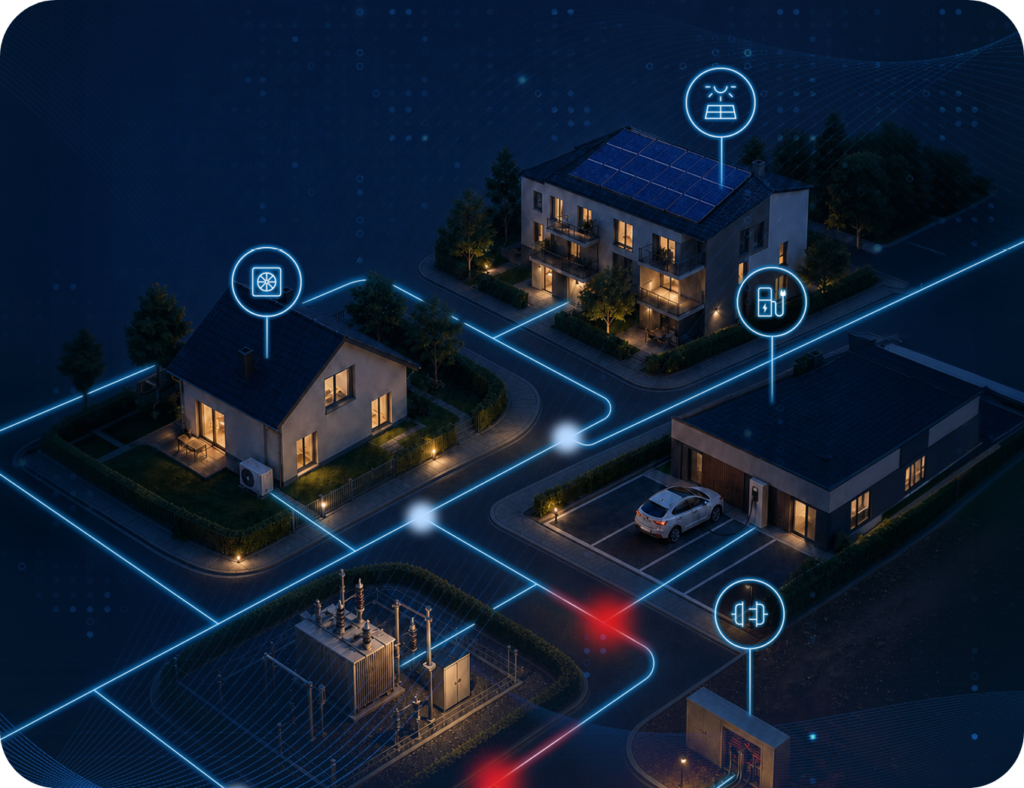
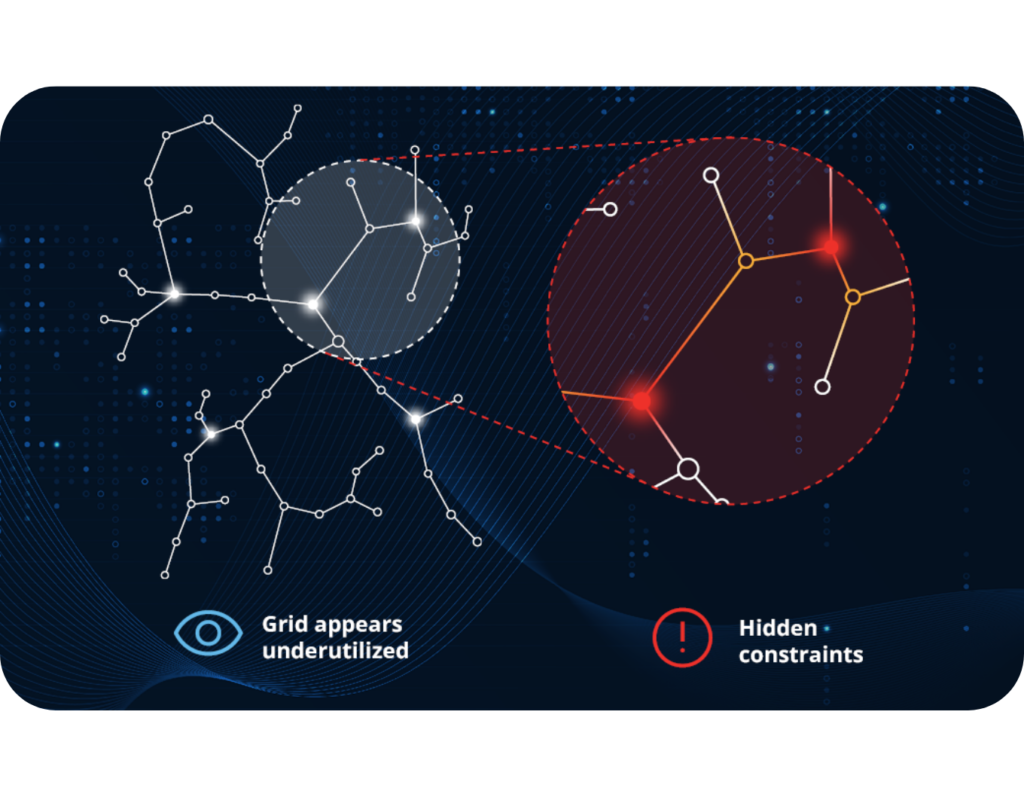
At first glance, the problem appears straightforward: there is not enough grid capacity. But in reality, many networks operate far below their theoretical capacity most of the time, while still experiencing localized congestion and voltage issues during peak periods. This leads to a paradox: underutilized assets coexisting with the need for costly grid reinforcement.
Without visibility into what is happening at the low-voltage level, it becomes extremely difficult to:
- identify where constraints are building up,
- understand the real impact of new connections or
- determine whether investment is truly needed.
As a result, many decisions, especially investment decisions, are still based on simplified assumptions and conservative scenarios rather than real system behavior.
Why traditional approaches are no longer enough
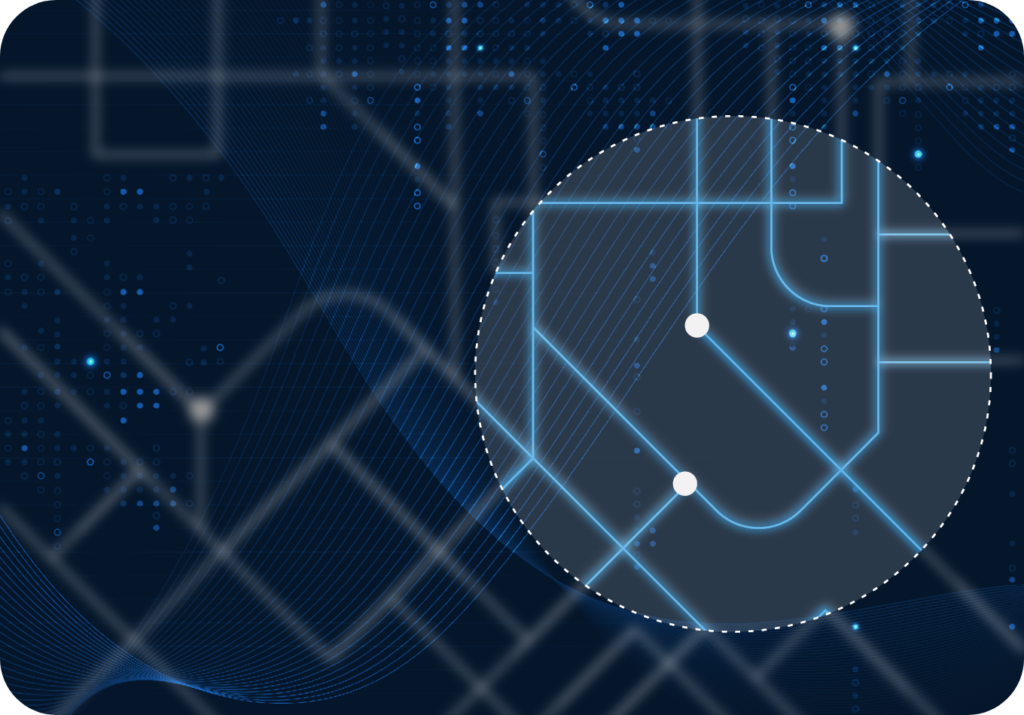
Traditional grid planning methods were designed for a fundamentally different system: centralized generation, predictable demand patterns, and one-directional power flows. Today’s grid operates under very different conditions:
- bidirectional flows from distributed generation
- fluctuating consumption patterns
- and increasing interaction between assets across the network.
Static approaches, such as fixed capacity maps or worst-case scenario planning, struggle to reflect this complexity. To ensure reliability, utilities often compensate by reinforcing infrastructure more conservatively than may actually be needed, which can lead to higher costs and lower overall efficiency. As a result, the traditional “build more capacity” approach is no longer sustainable.
A shift in mindset: from building to understanding
To address these challenges, utilities are starting to rethink how distribution grids are managed. Instead of focusing solely on expanding infrastructure, the focus is shifting towards:
- understanding how the grid behaves in real conditions,
- optimizing existing capacity and
- using flexibility as a resource.
This marks a transition from a “build and connect” model to a more advanced “connect and operate” approach, where decisions are driven by data and system-wide insight, not assumptions.
What modern grid management requires
Supporting this shift requires a new set of capabilities:
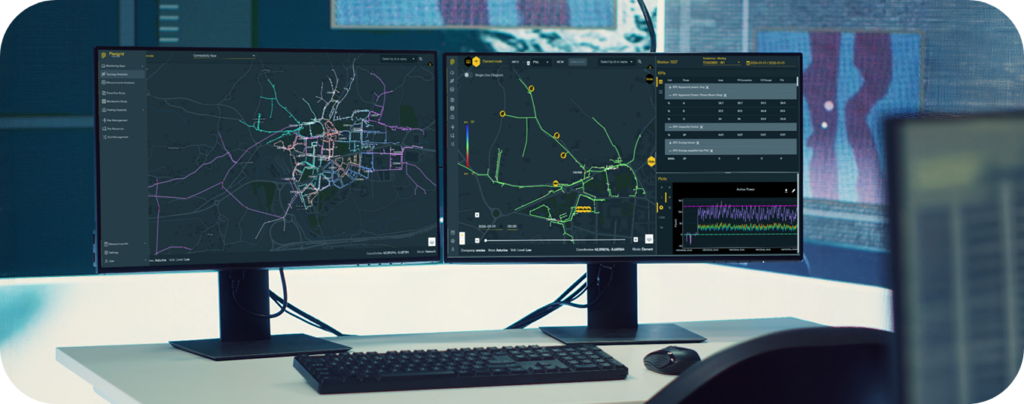
- Real visibility of low-voltage conditions: Understanding what is happening across the network, including loads, voltage levels, and constraints.
- Advanced analytics and simulation: The ability to simulate grid behavior across past, present, and future scenarios.
- Flexibility management: Using distributed energy resources, demand response, and new market mechanisms to manage constraints dynamically.
Individually, these capabilities provide value. Combined, they enable a fundamentally new way of managing the grid, connecting visibility, planning, and flexibility into one data-driven approach.
The role of digital twins
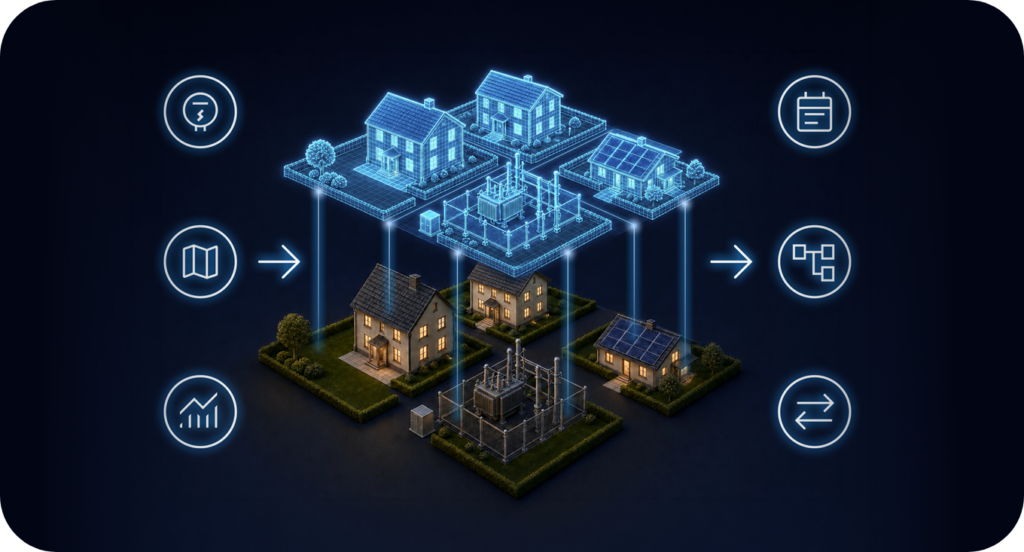
This is where digital twin technology becomes essential. A digital twin is not just a data platform or a visualization tool. It is a continuously updated, unified model of the real grid that integrates data from multiple sources, including smart meters, GIS systems, and operational platforms, into a single, coherent view.
By combining these data streams, utilities can:
- gain real-time insight into grid conditions,
- simulate the impact of operational and planning decisions and
- anticipate constraints before they occur.
In practice, this concept is already being applied through solutions such as Symbiot Twinner. By combining grid data, modelling, analytics, and simulation capabilities into a single actionable model, Symbiot Twinner enables utilities to better understand grid behavior, anticipate constraints, and make more informed operational and investment decisions.
Looking ahead
As the energy transition accelerates, the pressure on distribution grids will continue to grow. Electrification, decentralization, and regulatory expectations will require utilities to operate with greater precision, speed, and flexibility than ever before.
Meeting these challenges will require a shift towards fully data-driven decision-making, where visibility, analytics, and flexibility are integrated into everyday operations.
Solutions like Symbiot Twinner make this shift possible in practice, enabling utilities to move from static planning approaches to real-time, data-driven decision-making across planning, operations, and flexibility.
The future of grid management will not be defined by how much capacity is built — but by how well it is understood.