

Ecodesign requirements
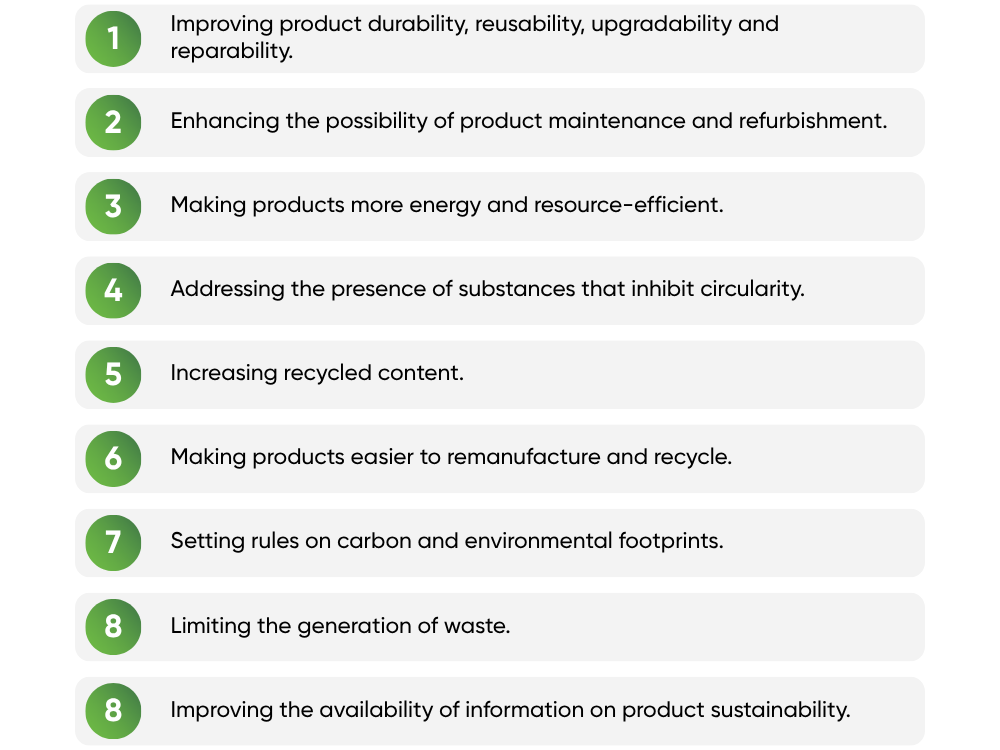
At Iskraemeco, ecodesign is built into the way we develop our smart meters. We see it as a necessary response to the increasing importance of addressing the scarcity of raw materials – driven both by regulation and by expectations from customers and markets, particularly in Western and Northern Europe.
The process starts in the earliest design phase. We aim to reduce the amount of material used, choose responsibly sourced raw materials, and design products so that they can be used efficiently and recycled at the end of their life. Our approach is supported by internal frameworks such as our Supplier Code of Conduct, Sustainable Procurement Policy, and Global Supply Agreement. Through our Supplier Portal, we collect and track data on supplier certifications, financial performance, labor practices, and sustainability-related initiatives.
One of our ongoing efforts is to reduce the product’s own energy consumption, addressed by our Climate Conscious Products study. We also design products with end-of-life in mind – our meters are almost entirely recyclable.
A key area we are continually investigating is the use of recycled plastics in our meters, which would significantly improve their material footprint. To better understand the full environmental impact of our products, we carry out Life Cycle Assessments (LCAs). These analyses examine all phases of a product’s lifecycle – from raw material sourcing through manufacturing, distribution, use, and end-of-life – and are verified by independent experts through Environmental Product Declarations (EPDs). The results help us identify where improvements are needed and can be made already during development.
In 2023, we published our first EPD for the MT880 meter with the help of an external partner. Based on this experience, we have developed internal expertise. The LCA for the IE.X meter family is currently being executed in-house by our environmental specialist, with support from the sustainability team. The EPD is now in the process of being verified and published.
Looking ahead, we plan to expand our LCAs and EPDs to cover all major product families. By the end of 2025 we aim to finalize an LCA for the LEAN product family.
Applying ecodesign principles and investing in lifecycle analysis helps us make informed decisions during development, it gives us a clear understanding of a product’s environmental impact and help identify areas for further improvement already during the design phase. It also ensures we are prepared for regulatory changes and aligned with what the market increasingly expects from technology providers.
What this means for our customers and partners
Our products are designed to have a minimal impact on the environment and climate, and we are committed to improving this with every new generation. This translates into lower carbon footprints, higher energy efficiency, and smarter use of materials – benefits that directly support our customers’ and partners’ sustainability goals.